
Why Some Techniques Feel Effortless (And Others Feel Like Work)
It’s not about more strength. It’s about better conditions

Why Some Techniques Feel Effortless (And Others Feel Like Work)
You’ve probably experienced this at some point in training.
A technique works… but it feels like effort.
You have to push. You have to adjust. You have to “make it happen.”
And then there are those other moments.
Where the same kind of movement just works.
No strain. No forcing. It almost feels like the body moves on its own.
Those moments are often described as:
“good timing”
“better technique”
or even “just one of those things”
But there’s something more specific happening.
The Difference Isn’t Strength
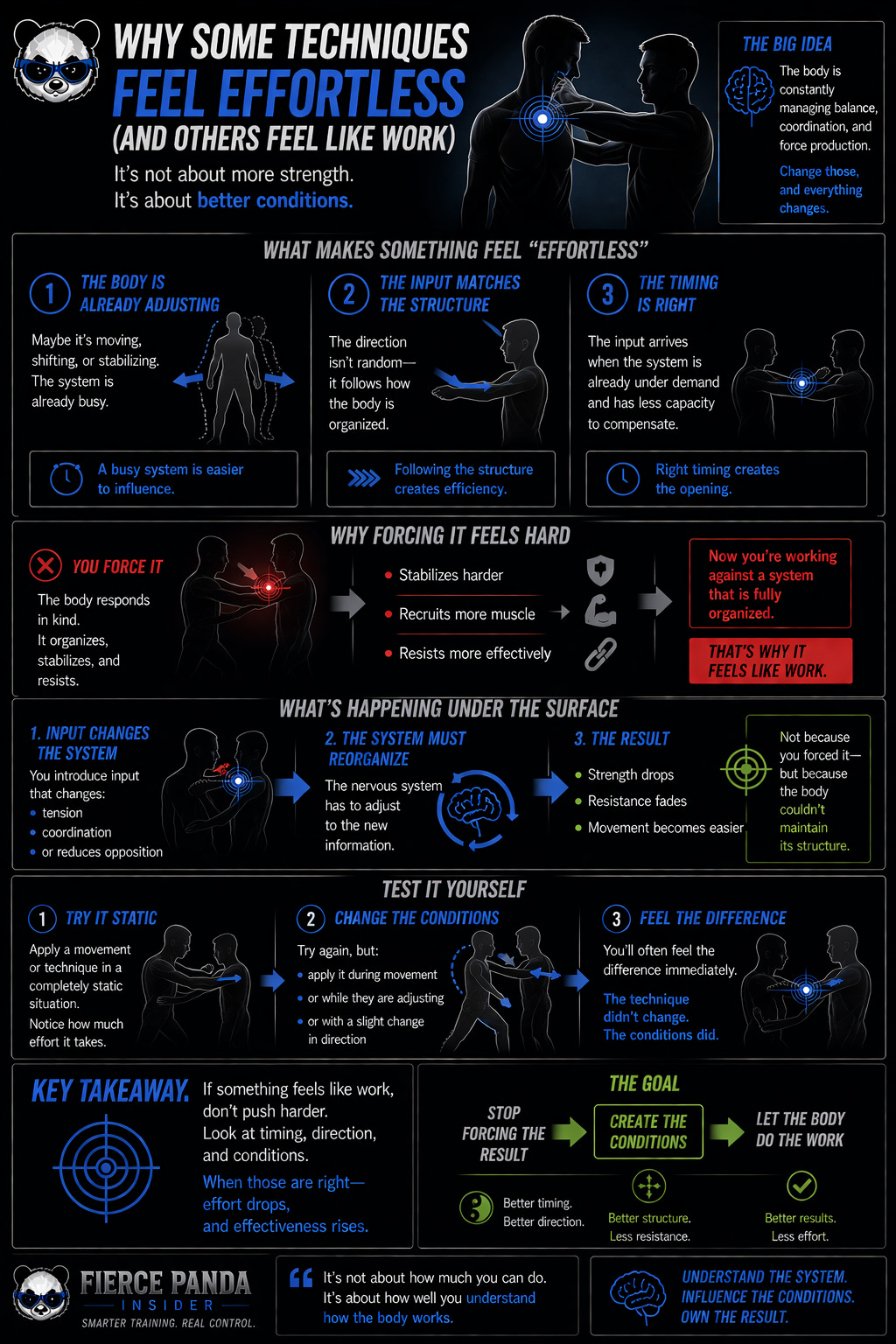
When something feels effortless, it’s not usually because you suddenly became stronger. It’s because the system you’re working on became easier to influence.
The body is constantly managing:
balance
coordination
and force production
When all of those are working smoothly, it can resist, adapt, and compensate.
But when they’re disrupted, even slightly, everything changes
What Makes Something Feel “Effortless”
Effortless technique usually happens when three things come together:
First, the body is already adjusting. Maybe it’s moving, shifting, or stabilizing.
Second, the input matches the structure. The direction isn’t random…it follows how the body is organized.
Third, the timing is right. The input arrives when the system is already busy.
None of these require more force. They just change the conditions.
Why Forcing It Feels Hard
When you try to make something work through effort, the body responds in kind.
It stabilizes harder. It recruits more muscle. It resists more effectively.
Now you’re working against a system that is fully organized.
That’s why it feels like work. Not because the technique is wrong but because the conditions aren’t in your favor
What’s Really Happening Under the Surface
When the timing and conditions are right, the nervous system is already managing multiple demands.
Now you introduce input that:
changes tension
alters coordination
or reduces opposition
The system has to reorganize.
That’s when:
strength seems to drop
resistance fades
and movement becomes easier
Not because you forced it but because the body couldn’t maintain its structure
A Simple Way to Feel This
Take a basic movement or technique you know. Try to apply it in a completely static situation.
Notice how much effort it takes.
Now try again, but:
apply it during movement
or while the person is adjusting
or with a slight change in direction
You’ll often feel the difference immediately. The technique didn’t change…the conditions did.
🐼 Final Thought
Effortless doesn’t mean easy. It means the system is no longer working in your opponent’s favor.
When timing, direction, and conditions align, you stop forcing the result and start creating it.
Key Takeaway
If something feels like work, don’t push harder.
Look at:
timing
direction
and conditions
Because when those are right…effort drops, and effectiveness rises.
Understand the Science. Master the Art.